AHEC Rural Healthcare Summer Camp: Building the Next Generation of West Texas Health LeadersJanuary 13, 2026
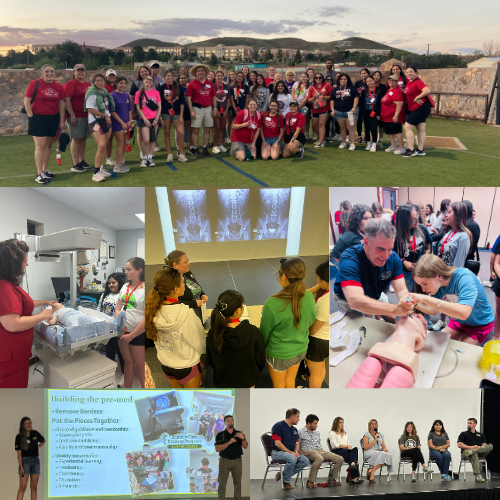 By Brie Ragland, MC Director of Marketing & Communications When Katie Miller, Director of the Permian Basin Area Health Education Center (AHEC), scribbled “start a rural healthcare summer camp” on a sticky note, she wasn’t sure how or when it would happen — only that it had to. The idea came to fruition after a conversation with Dr. Adrian Billings, Associate Academic Dean for the Rural and Community Engagement Division at Texas Tech University Health Sciences Center (TTUHSC) Permian Basin. He expressed interest in a hands-on initiative that would connect high school students from underserved areas to healthcare careers. That Post-It note goal and the kismet conversation became a reality in 2023-2024.
Now in its second year, the Rural Healthcare Summer Camp has grown into a collaborative,
cross-institutional effort to inspire, educate, and empower the next generation of
rural healthcare professionals in West Texas. And it's working. In just two years, the Rural Healthcare Summer Camp has experienced remarkable growth. What began with 19 students in 2024 expanded to 28 campers in 2025 — and according to Katie Miller and Dr. Adrian Billings, that momentum is only building. This year’s camp was guided by seven college-student counselors with a “Grow Your
Own” approach to mentorship that highlights local talent and demonstrates the many
healthcare paths available in West Texas. These counselors not only shared their knowledge
but served as living examples of what students from the region can achieve, from nursing
and pharmacy to social work and behavioral health. The counselors were:
“It’s incredibly important that these high school students see college students in action,” said Miller. “Representation matters. When young people see someone just a few years ahead of them pursuing a healthcare career, it makes the goal feel real and achievable.” Campers spent a week engaging in hands-on activities, learning from expert panelists, and participating in immersive simulations. They practiced CPR techniques, examined x-rays, and explored healthcare tools and technologies used in real-world settings. “When students get hands-on experience and speak directly with professionals in the field, it opens their eyes to what’s possible,” said Kally Eddison, Department Chair of Respiratory Care at Midland College. “At the camp, we’re not just talking about careers. We’re showing students that there are real opportunities available to them, right here in their own communities. It’s rewarding to help them see themselves as future respiratory therapists, nurses, or healthcare leaders.” Collaboration at Its CoreThe Rural Healthcare Summer Camp thrives on partnership. Institutions such as Sul Ross State University, Texas Tech Health Sciences Center, UTEP, UTPB, and Midland College are integral to its success. Each partner brings unique academic and professional expertise to the table. Midland College had a strong presence at the 2025 camp. Faculty and staff served as panelists, led breakout sessions, and connected with students during a health science resource fair. The college highlighted several key programs, including its Primary Care Pathway Program, Respiratory Care Program, and Continuing Education Health Sciences Programs, showing students how accessible and achievable a career in healthcare can be, right here in West Texas. Investing in the FutureA critical component of this year’s camp success was generous funding support from Diamondback Energy, which contributed over $10,000 to cover counselor stipends and camper housing costs. “At Diamondback Energy, we understand that strong communities need strong healthcare
systems, and that starts with investing in the next generation,” said Ashley Colquitt,
Corporate Affairs Representative. “We’re proud to support a program that not only
inspires students but also helps strengthen rural healthcare access across the Permian
Basin.” As the Rural Healthcare Summer Camp continues to grow in size and impact, continued support from community and corporate partners will be key to expanding its reach. Whether through funding additional student slots, offering program enhancements, or covering transportation and lodging costs, these investments have the power to change the future of healthcare in rural West Texas. Changing Lives, One Camper at a TimeFor students like Maritza Tarin, the camp was more than a summer activity … It was
a career awakening. “This experience taught me so much,” said Tarin. “I learned just how important clear
and thorough communication is in healthcare. Teamwork also stood out to me, no one
is ever really working alone! Every role matters, whether you’re helping save a life
or simply making a patient feel more comfortable in an uncomfortable situation. I
also realize coming from a rural community doesn’t diminish our chances of achieving
our dreams and healthcare. It gives us more of an opportunity.” Counselors, too, walked away with a renewed sense of purpose. Zariah Soto and Eriana
Loya reflected on their week of mentorship, noting the powerful impact of connecting
with students who reminded them of their younger selves. “I was motivated to become a counselor because the camp directly addresses a cause I'm passionate about: closing the gap in healthcare for rural communities,” said Soto. “My professor introduced me to the opportunity, and I was immediately eager to help. I saw it as a chance to directly inspire the next generation of healthcare leaders, particularly in the areas where they are most needed.” She continued, “My experience as a counselor transformed my view on how to effectively
introduce people to public health. It showed me that true understanding doesn't come
from a simple explanation; it comes from hands-on opportunities guided by a professional
mentor. The camp solidified my perspective that a mentor can reveal the interconnectedness
of all public health careers. By providing this tangible, holistic look at the field,
the program proved to me that this is the most effective way to inspire the next generation
and bring new talent into the field.” A Strategic Investment in Rural HealthcareAs demand for rural healthcare workers grows, programs like the Rural Healthcare Summer
Camp are essential. By exposing students early to healthcare careers, connecting them
with college mentors, and linking them to local training pathways, the camp is building
a pipeline of future providers who understand and are inspired to serve rural communities.
|
Office of Marketing Communications & Public RelationsPevehouse Administration Building, Room 160
Midland College, 3600 N. Garfield
Midland, Texas 79705
|
WelcomeMidland College has many programs and options for our students. If you are investigating the opportunities we offer, our Welcome Center is the perfect place to receive general information. |